
Female hair transplant London procedures require a completely different design philosophy compared to male surgery. Female hair transplant London planning focuses on softness, density preservation, and natural framing rather than aggressive lowering or sharp angles.
Hair loss in women often presents differently. Instead of deep temple recession, many women experience diffuse thinning or widening of the part line. Because of this, the surgical strategy must adapt.
At London Hair Transplant Clinic, consultation always begins with detailed assessment of pattern, donor density, and long-term stability before recommending treatment.
Understanding Female Hair Loss Patterns
Women rarely follow the same Norwood scale pattern seen in men. Instead, thinning may appear:
- Across the crown
- Along the parting
- At the frontal hairline with retained temples
- Around the edges due to traction alopecia
This difference directly affects female hair transplant London planning.
A best hair transplant clinic evaluates hormonal history, family genetics, and future thinning risk before designing the hairline. Women often maintain their frontal outline but lose density behind it. Lowering the hairline too much can look unnatural.
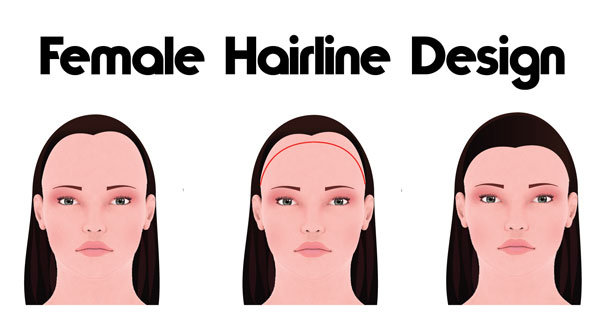
Why Female Hairline Design Must Be Softer
The female hairline is typically:
- Lower and more rounded
- Less angular
- Naturally irregular but subtle
Male hairlines can include sharper corners and stronger temple definition. Female hair transplant London surgery must avoid creating a masculine pattern.
Surgeons use finer graft placement and irregular micro-zigzag patterns to recreate natural softness. Hair direction also matters. Angles must match original growth flow.
A best hair transplant clinic will always prioritise natural blending over dramatic lowering.
Density Expectations in Female Hairline Surgery
Women often desire fuller density at the front. However, donor supply can be limited if thinning is diffuse.
Female hair transplant London procedures must balance:
- Donor preservation
- Visual density
- Future thinning protection
Overharvesting donor hair can weaken the back of the scalp. A conservative graft strategy protects long-term stability.
Clinics experienced in hair transparent London techniques often use smaller graft sessions combined with medical therapy for best outcomes.
The Role of Donor Area Assessment
Many women experience diffuse thinning, meaning the donor zone is not always as strong as in male cases.
During consultation, the surgeon will assess:
- Follicular unit density
- Hair shaft thickness
- Scalp elasticity
- Miniaturisation rate
If the donor zone shows instability, surgery may be delayed. A best hair transplant clinic will never proceed without confirming donor strength.
This careful evaluation protects results for years to come.
Traction Alopecia and Female Hairline Surgery
Traction alopecia is common in women who wear tight hairstyles. The frontal hairline may thin permanently due to repeated tension.
Female hair transplant London surgery can restore this area effectively when traction has stopped.
However, patients must commit to avoiding tight styling post-surgery. Continuing tension can damage new grafts.
Surgeons often recommend lifestyle adjustments alongside surgery to maintain long-term density.
Age Considerations in Female Patients
Age significantly affects surgical planning.
Younger women with active thinning may not be ideal candidates immediately. Surgery does not stop future hair loss. Ongoing thinning can create imbalance.
Older women with stable patterns often achieve more predictable results.
A best hair transplant clinic carefully evaluates stability before recommending surgery.
Combining Surgery with Medical Therapy
Female hair transplant London planning often includes supportive medical treatment.
Options may include:
- Topical treatments
- PRP therapy
- Nutritional support
- Hormonal assessment where appropriate
Combination therapy strengthens surrounding hair and improves overall thickness.
Patients seeking hair transparent London solutions should understand that surgery works best when supported by scalp health optimisation.
Recovery Expectations for Female Patients
Recovery for women is similar to male recovery, but styling concerns may differ.
During the first two weeks:
- Mild redness is normal
- Scabbing forms and sheds
- Transplanted hairs begin resting phase
Shedding occurs within three to six weeks. New growth begins around three months.
Female hair transplant London patients often appreciate the ability to maintain longer hairstyles, which can conceal early healing signs.
Emotional Impact of Female Hairline Restoration
Hair loss in women can deeply affect confidence and identity. A carefully designed restoration often improves self-image significantly.
The key is subtlety.
Natural framing enhances facial balance without appearing artificial.
This is why selecting a best hair transplant clinic with experience in female-specific design is critical.
Is Hair Transplant Suitable for Women?
Yes, hair transplant surgery can be suitable for women, particularly those with traction alopecia or stable pattern thinning. According to NHS information on hair loss treatments, suitability depends on donor hair availability and cause of hair loss. A specialist consultation is essential before surgery.
Read the Full Article (Source: NHS)
Final Thoughts
Female hair transplant London procedures demand precision, restraint, and aesthetic sensitivity.
Unlike male surgery, female hairline design prioritises softness, density preservation, and future stability.
Choosing a best hair transplant clinic ensures proper donor evaluation, realistic planning, and natural results.
With personalised consultation and careful execution, female hair transplant London surgery can restore confidence while maintaining femininity and balance.