
Crown hair transplant London procedures require a very different strategy compared to frontal hairline restoration. Crown hair transplant London surgery focuses on coverage and density illusion, while hairline transplant London planning centres on framing the face and creating natural definition.
Many patients assume a transplant is the same everywhere on the scalp. In reality, each area presents unique challenges. The crown and the hairline demand different graft numbers, angles, and long-term planning.
At London Hair Transplant Clinic, surgical design always adapts to the specific zone being treated.
Crown Hair Transplant London: Understanding the Whorl Pattern
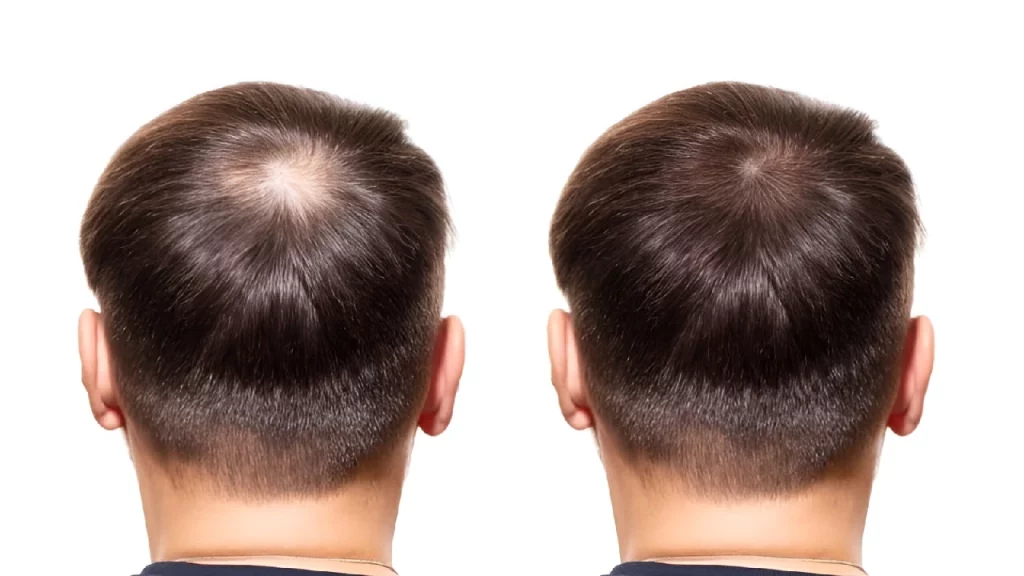
The crown is the circular area at the back of the scalp. It contains a natural spiral pattern known as the hair whorl.
A crown hair transplant London procedure must recreate this spiral. Grafts are placed in curved, rotational patterns to mimic natural growth.
Key challenges include:
- Larger surface area
- Higher graft requirement
- Optical illusion of thinning
- Strong light reflection
Because the crown spreads outward in a circular motion, it often requires more grafts than patients expect.
A best hair transplant clinic will always explain that the crown may need staged treatment if thinning continues.
Hairline Transplant London: Framing the Face
The frontal hairline is the most visible area. Hairline transplant London surgery focuses on:
- Natural irregularity
- Age-appropriate placement
- Soft transition zones
- Fine single-hair grafts at the front
Unlike the crown, the hairline does not require a spiral pattern. Instead, it requires careful density gradation.
Surgeons use single grafts at the leading edge and multi-hair grafts behind it. This layering effect creates a realistic transition.
A best hair transplant clinic prioritises subtlety in hairline design to avoid artificial straight lines.
Why Graft Numbers Differ Between Crown and Hairline
Crown hair transplant London surgery usually requires more grafts per square centimetre. This is due to:
- Circular spread of thinning
- Greater scalp visibility
- Depth of existing loss
Hairline transplant London procedures often require fewer grafts but higher precision.
Patients may assume the hairline requires more grafts because it sits at the front. In reality, the crown often consumes more donor supply.
Clinics specialising in hair transparent London procedures carefully calculate graft distribution to preserve donor reserves.
The Role of Light and Density Illusion
Lighting affects how thinning appears.
The crown reflects overhead light. This exaggerates thinning, especially in bright environments.
The hairline is viewed straight on. Density must look natural from conversational distance.
Crown hair transplant London planning often prioritises strategic placement rather than maximum density. Optical coverage can be achieved without overharvesting.
A best hair transplant clinic understands how light interacts with graft direction and spacing.
Progression Patterns: Why Long-Term Planning Matters
Hair loss progression differs between areas.
The crown may continue thinning for years. The hairline often stabilises earlier.
Because of this, crown hair transplant London surgery may require conservative graft placement to protect future options.
Hairline transplant London procedures must also account for ageing. Lowering the hairline too aggressively can look unnatural later in life.
Long-term thinking protects aesthetic balance.
Healing Differences Between Crown and Hairline
Recovery patterns vary slightly between zones.
Crown healing:
- Swelling is usually minimal
- Redness may last longer due to wider area
- Density appears lighter at first
Hairline healing:
- Mild swelling can move downwards
- Redness is often more visible
- Early growth is closely scrutinised
Hair transparent London patients often worry more about hairline visibility during early healing. Proper aftercare reduces this concern.
Combining Crown and Hairline Surgery
Some patients require both areas treated in one session. This is possible when donor density is strong.
However, crown hair transplant London surgery combined with hairline transplant London planning may demand high graft numbers.
In these cases, surgeons prioritise:
- Frontal framing first
- Strategic crown coverage second
A best hair transplant clinic will guide patients on whether staged surgery is safer.
Managing Expectations for Each Area
Crown regrowth often appears slower due to rotational pattern complexity.
Hairline growth is easier to observe because it frames the face.
Patients must understand:
- Full crown density can take 12 months
- Hairline softening may appear earlier
- Final blending takes patience
Hair transparent London procedures succeed when expectations match biology.
Is Crown Hair Harder to Transplant Than the Hairline?
Yes, the crown can be more technically demanding due to its spiral growth pattern and larger thinning area. According to NHS guidance on hair restoration surgery, outcomes depend on donor availability and surgical precision. Recreating natural direction in the crown requires careful graft angling and density planning.
Read the Full Article (Source: NHS)
Final Thoughts
Crown hair transplant London and hairline transplant London surgeries are not interchangeable techniques.
The crown requires spiral pattern recreation and density illusion. The hairline demands softness and facial harmony.
Choosing a best hair transplant clinic ensures grafts are allocated strategically, protecting both immediate results and long-term stability.
With area-specific planning and realistic expectations, both crown and frontal restoration can deliver balanced, natural outcomes.